
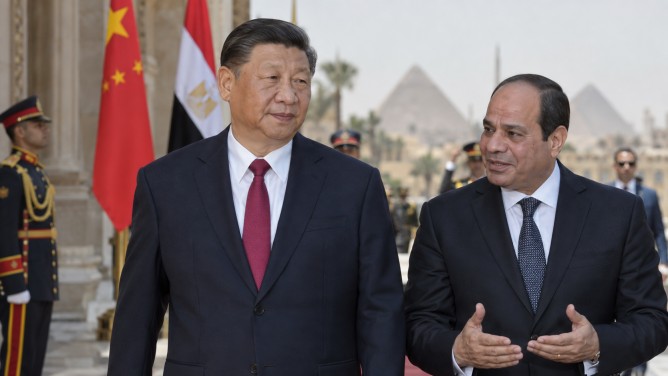
In a significant diplomatic move, Chinese President Xi Jinping has emphasized the need for a new security architecture in the Middle East, one that is founded on cooperation, dialogue, and the respect for national sovereignty. During his discussions with Egyptian President Abdel Fattah El-Sisi in Cairo, Xi laid out a comprehensive four-point strategy. This approach aims to bolster regional security cooperation, tackle interconnected conflicts, support economic development, and enhance international coordination.
Xi highlighted the importance of Middle Eastern countries taking more control over their security matters and expressed opposition to external interference. He underscored that the Palestinian issue continues to be pivotal for resolving broader tensions across the region. In addition, China expressed readiness to collaborate with Middle Eastern nations on safeguarding international shipping routes, promoting economic growth, and addressing the root causes of conflict. Xi reaffirmed that the United Nations Charter and international law should remain the guiding principles for addressing regional challenges.
The dialogue between the two leaders also placed considerable emphasis on strengthening economic ties between China and Egypt. Xi advocated for increased collaboration in sectors such as infrastructure, energy, agriculture, communications, electric vehicles, green energy, aerospace, and the digital economy. For 14 consecutive years, China has been Egypt’s largest trading partner and foremost source of imports. Over the years, bilateral trade has seen a substantial rise, climbing from $10.21 billion in 2013 to $20.79 billion in 2025.
Further strengthening their partnership, China and Egypt signed over 20 cooperation agreements spanning diverse areas including artificial intelligence, trade, technology, education, transportation, and industrial supply chains. The two nations also released a joint statement aimed at deepening their comprehensive strategic partnership, signaling a commitment to enhanced collaboration and shared economic progress.