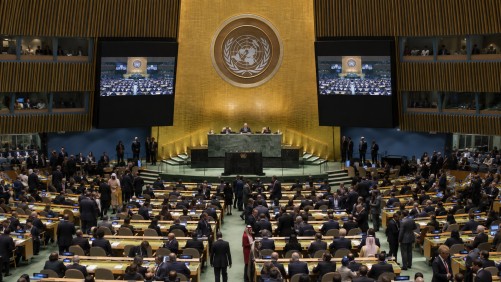
The global stage is set for intensive diplomatic discussions as nearly 130 world leaders convene in New York for the United Nations General Assembly. Key international conflicts, including those in the Middle East and Ukraine, alongside the challenges posed by artificial intelligence, are expected to dominate the agenda, potentially reshaping international policies and alliances.
US President Donald Trump is set to play a pivotal role, with scheduled addresses and meetings with Ukrainian President Volodymyr Zelenskyy, British Prime Minister Andy Burnham, and Japanese Prime Minister Sanae Takaichi. These engagements are likely to influence ongoing tensions and cooperation involving these nations. In particular, discussions between Trump and Zelenskyy may impact strategies concerning the Russia-Ukraine conflict. French President Emmanuel Macron has already engaged in talks with Trump, proposing a temporary halt to attacks on Ukraine’s energy infrastructure and emphasizing the need to bolster Ukraine’s defensive capabilities.
The assembly will also spotlight the persistent conflict in Gaza, with efforts to advance a two-state solution gaining attention. Irish Prime Minister Micheál Martin will participate in discussions aimed at fostering a permanent ceasefire and furthering diplomatic progress toward resolving the Israeli-Palestinian conflict.
In addition to these pressing issues, Iran’s presence at the UN through a diplomatic delegation led by Foreign Minister Abbas Araghchi signals Tehran’s intent to assert its positions on the global stage. Although a meeting between the US and Iran has not been scheduled, US Secretary of State Marco Rubio has indicated that Washington remains open to dialogue, underscoring the ongoing priority of preventing Iran from developing nuclear weapons.
This year’s General Assembly offers a critical platform for addressing some of the world’s most urgent challenges and may set the tone for future international cooperation and conflict resolution strategies.