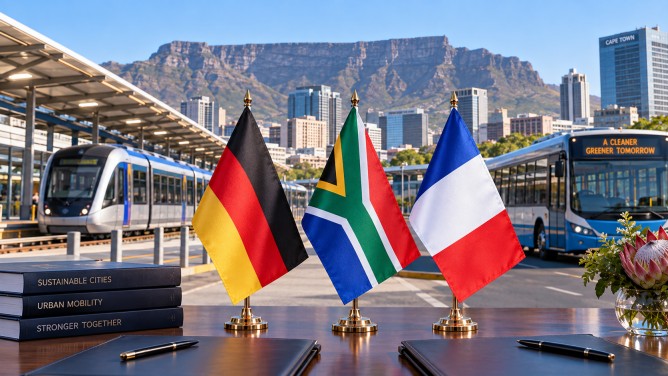
In a significant development to bolster essential municipal services in South Africa, Germany and France have pledged €300 million, or approximately R5.6 billion, in concessional financing. This financial commitment is targeted at enhancing electricity, water, sanitation, and waste management services across the nation’s eight metropolitan municipalities. The initiative is part of the Metro Trading Services Reform programme, which seeks to improve the financial and operational efficiency of these critical services and ensure the generated revenue is reinvested into infrastructure improvements.
Germany and France’s combined efforts will directly impact more than 22 million residents served by these metropolitan areas. Specifically, Germany has committed €200 million, while France will contribute €100 million. This funding is integral to the countries’ support for South Africa’s Just Energy Transition programme. The reforms aim to address service outages, tackle infrastructure backlogs, and secure the long-term financial sustainability of these major urban centers.
The South African government emphasized that enhancing municipal services is crucial not only for the energy transition but also for attracting further public and private investment. Such investments are particularly important for modernizing electricity distribution networks. Despite this substantial financial injection, the scale of the infrastructure challenges indicates that additional funding will be necessary. Germany has previously provided concessional loans to Johannesburg and Cape Town, specifically for electricity grid upgrades and integrating renewable energy sources. Similarly, France has contributed to infrastructure and climate-resilience projects in various South African municipalities.
This reform programme is a component of broader efforts to improve municipal governance and financial management. By ensuring essential services can generate sufficient revenue, the programme aims to maintain and expand vital infrastructure. For the residents of these metropolitan areas, the true measure of success will be whether this investment results in more reliable electricity, water, sanitation, and waste services. Furthermore, the goal is to build financially sustainable systems that support long-term infrastructure development.