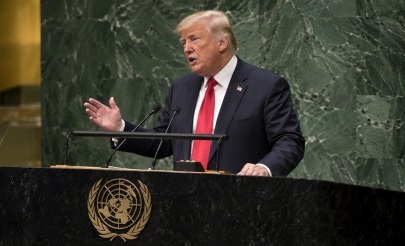
The potential economic impact of artificial intelligence (AI) could surpass previous technological revolutions, according to U.S. President Donald Trump, who recently addressed the United Nations General Assembly in New York. Trump’s statements suggest that the U.S. plans to forge ahead with AI development without endorsing broad international controls, highlighting a significant policy direction that may influence global AI strategy and economic landscapes.
In his address, Trump proposed that AI be referred to as “super intelligence” in U.S. government documents, suggesting that the term “artificial” underplays the technology’s capabilities. This move could reshape perceptions and policy language surrounding AI in the U.S., potentially affecting how other nations and companies approach the technology.
Despite concerns from some global leaders about AI’s potential risks, Trump dismissed warnings about its dangers as exaggerated. He rejected calls for a global system to control AI, emphasizing that the U.S. will not support such efforts. This stance contrasts with recent appeals from over 20 political leaders advocating for stronger international cooperation, safety testing, and common standards for AI advancements.
As part of his vision for AI, Trump has floated the idea of establishing an “AI Force” and appointing an AI czar to oversee the technology’s management in the United States. However, his administration has yet to release detailed plans on how this structure would function, leaving questions about the practical implementation of these proposals.
The term “superintelligence” already holds specific meaning within AI research, generally referring to a hypothetical system with intellectual capabilities far exceeding those of humans. Trump’s broader application of this term may spur discussions on its implications for both scientific communities and policy frameworks.