
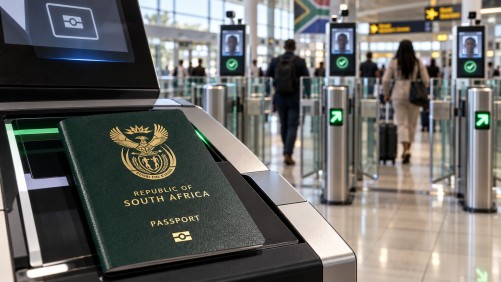
South Africa is set to transform its passport system with the introduction of a new biometric e-passport, aimed at enhancing document security and expediting border processing. This initiative, spearheaded by the Department of Home Affairs in collaboration with Government Printing Works, is expected to increase the passport’s resistance to forgery and streamline the travel experience for South African citizens.
Home Affairs Minister Leon Schreiber announced that the e-passport will feature a secure electronic chip containing biometric data, such as high-resolution facial images and fingerprints. This technology will allow for the automated verification of a traveller’s identity at border control points, thereby reducing the reliance on manual document checks and potentially shortening queues at immigration.
In addition to the chip, South Africa is enhancing its passport application process. Plans include incorporating biometric verification of passport photographs to mitigate fraud risks, such as photo manipulation. The government is also considering expanding passport application services through bank branches as part of a broader modernization effort within Home Affairs services.
A key potential benefit of the biometric e-passport is its role in facilitating visa-free travel negotiations. While the new passport itself won’t automatically grant visa-free access to more countries, the improved security features could bolster South Africa’s position in discussions for visa exemptions. Schreiber has expressed the government’s intention to seek greater visa-free access once the passport systems and security measures meet international standards.
The launch date for the new biometric e-passport has yet to be confirmed, as the Department of Home Affairs continues to work on automating and securing the passport application process. A proposal is expected to be presented to the Cabinet after these enhancements are fully developed.